





What Is MCT Oil? Proven Facts for Awesome Results Now


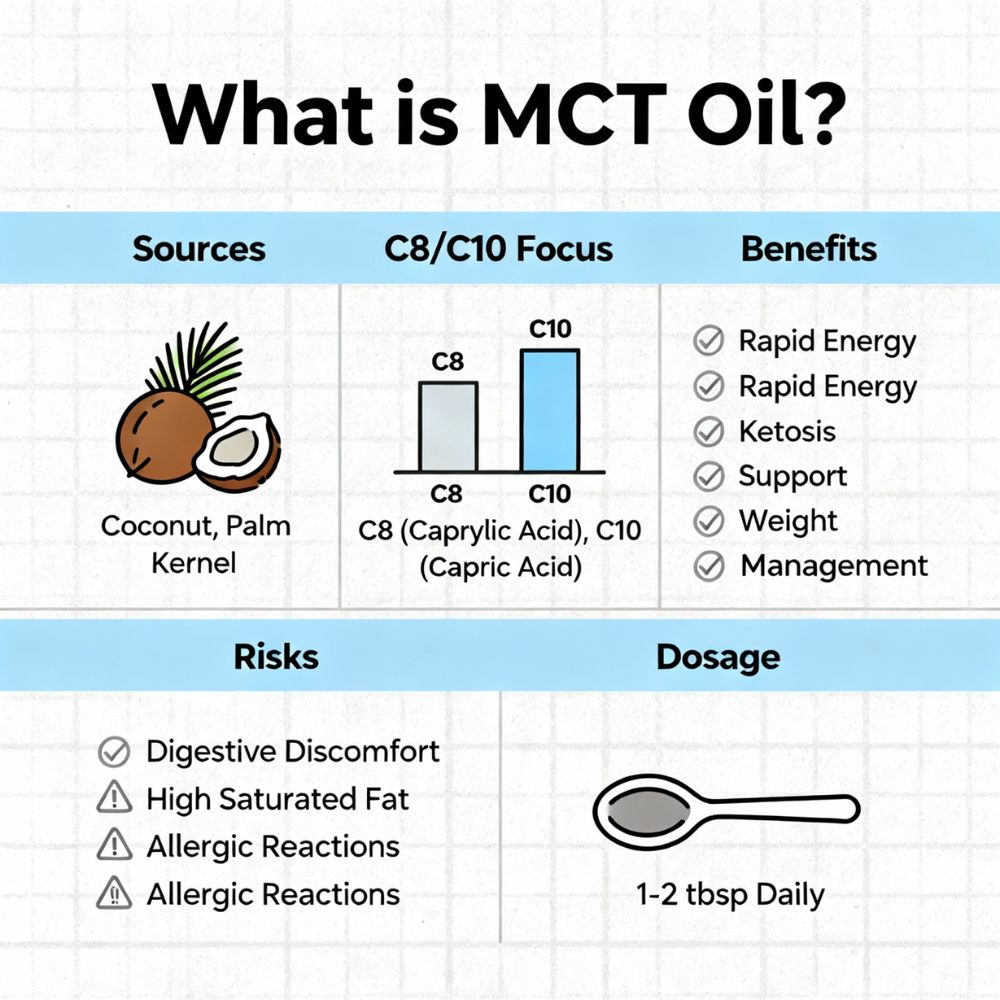
What is MCT oil (Medium-chain triglyceride) refined product that typically comes from coconut or palm kernel oil, though smaller amounts of MCTs can also be found in foods like dairy products. As the name suggests, these fats have a medium-length chain structure, which makes them easier and faster for the body to digest compared to the long-chain fats commonly found in oils, nuts, and other foods.
There are four main types of medium-chain fatty acids:
- Lauric acid
- Caproic acid
- Caprylic acid
- Capric acid
What is MCT oil contains mostly caprylic and capric acids, which account for the majority of its composition.
Potential Benefits of MCT Oil
May support reduced calorie intake
Some research indicates that MCT oil may help people consume fewer calories throughout the day. It contains about 10% fewer calories than long-chain triglycerides (LCTs), which are the dominant fats in sources like olive oil, nuts, and avocados. A 2020 review of 17 studies found that MCTs were linked to slightly lower calorie intake compared to LCTs. Other studies suggest MCT oils could trigger hormones like peptide YY and leptin that promote a sense of fullness, though evidence on appetite control remains mixed. For example, one 2017 study found that participants who had MCT oil at breakfast ate less at lunch than those who consumed coconut oil, but more research is needed to understand why.
Possible effects on weight and body composition
A 2015 review of randomized controlled trials found that MCTs supported modest weight loss and fat reduction, though many of the studies had quality limitations. Since MCTs can be converted into ketones—an alternative energy source for the body—they may be especially useful for people following a ketogenic diet. These diets aim to keep the body in ketosis, a state of fat-burning. The impact of MCTs, however, may vary depending on the individual.
A quick energy source
Because MCTs are shorter in length, they are absorbed faster than other fats and reach the liver quickly without needing bile for breakdown. This allows them to be used almost immediately as fuel or converted into ketones, which can also power brain cells by crossing the blood-brain barrier. This makes MCTs attractive to athletes and those on low-carb or ketogenic diets.
May help the body burn fat during exercise
Some studies suggest MCTs might encourage the body to use more fat than carbs during exercise. For instance, a 2009 study found that athletes who consumed MCTs before cycling burned more fat compared to those consuming LCTs, though the effects were not strong. More recent research shows mixed results, and overall, evidence suggests MCTs provide little or no significant boost in exercise performance.
Potential support for neurological conditions
Research indicates that MCTs and a ketogenic diet could help manage certain conditions like epilepsy, Alzheimer’s disease, and autism.
- Epilepsy: MCTs may boost ketone production, which has been linked to fewer seizures in some patients. A small 2022 study found that MCT supplementation reduced seizure frequency in participants who did not respond well to medication.
- Alzheimer’s disease: Since Alzheimer’s impairs glucose use in the brain, ketones from MCTs may provide an alternative energy source. Some studies have shown improved brain function and cognition in patients who took MCT oil.
- Autism: Limited evidence suggests ketogenic diets with MCTs may reduce certain behaviors in children, though more research is needed, and restrictive diets can carry nutritional risks.
Antimicrobial properties
MCTs, especially caprylic, capric, and lauric acid, may have antibacterial and antifungal effects. Some studies on infants, animals, and in lab settings show that MCTs can slow the growth of harmful bacteria and yeast, though strong human evidence is still lacking.
Possible effects on blood sugar
Certain studies suggest What is MCT oil could help with weight management and reduce insulin resistance, particularly in people with type 2 diabetes or metabolic syndrome. However, findings are inconsistent. Some research shows better blood sugar control after meals, while other data suggest long-term use—particularly of coconut oil—may worsen insulin resistance.
Potential Drawbacks
- Heart health concerns: MCT oil is made of saturated fats, which can raise triglycerides and LDL cholesterol. Though it may boost HDL cholesterol as well, the long-term implications on heart health are unclear. Oils like olive oil still have stronger evidence for protecting cardiovascular health.
- Appetite stimulation: In some cases, MCTs may increase hunger hormones like ghrelin, which could work against weight-loss goals.
- Liver fat buildup and digestive issues: High doses, especially more than 4–7 tablespoons a day, can cause abdominal discomfort, diarrhea, or long-term fat buildup in the liver. Moderation is key, and most experts suggest gradually introducing small amounts.
Conclution
MCT oil can provide quick energy, support ketosis, and may offer benefits for weight management, brain health, and certain medical conditions. However, potential side effects include elevated blood fats, appetite stimulation, and digestive discomfort if taken in excess. Whole food sources of healthy fats and balance within the diet remain important when considering MCT supplementation.
FAQs
What is MCT oil good for?
It’s often used as an energy booster, weight management tool, or supplement for cognitive health. Some evidence also links it to benefits for metabolism, infection control, and neurological conditions.
Is it the same as coconut oil?
No. While coconut oil naturally contains MCTs, MCT oil is a more concentrated, refined source derived from either coconut or palm kernel oil.
Does MCT oil reduce belly fat?
Some earlier research suggests it may reduce waist circumference, but stronger evidence is required.
Who should avoid it?
People with heart or liver conditions should consult a healthcare professional before using MCT oil, as it may worsen certain risks.