





Framing the low creatinine meaning: a grateful insight you need


Low Creatinine Meaning is a waste product formed when creatine, an amino acid found in muscles and certain foods, is broken down to generate energy during physical activity. While creatinine doesn’t serve a direct purpose in the body, its levels in the bloodstream can reveal important insights into kidney health, muscle condition, and even liver function.
Many healthy individuals maintain normal creatinine levels throughout their lives. However, for some, creatinine levels may drop below the standard range. Low creatinine is not a disease in itself but a signal that something else may be going on in the body.
Normal and Low Creatinine Meaning
Creatinine levels are influenced by multiple factors, including muscle mass, gender, age, hydration, and body size.
Typical reference ranges for creatinine in the blood are:
- Men: 0.7 to 1.3 mg/dL
- Women: 0.6 to 1.1 mg/dL
When levels fall below 0.7 mg/dL for men or 0.6 mg/dL for women, they are generally considered low. However, these numbers are not absolute. Each individual’s results must be reviewed alongside their medical history, lifestyle, and health conditions.
Signs and Symptoms of Low Creatinine
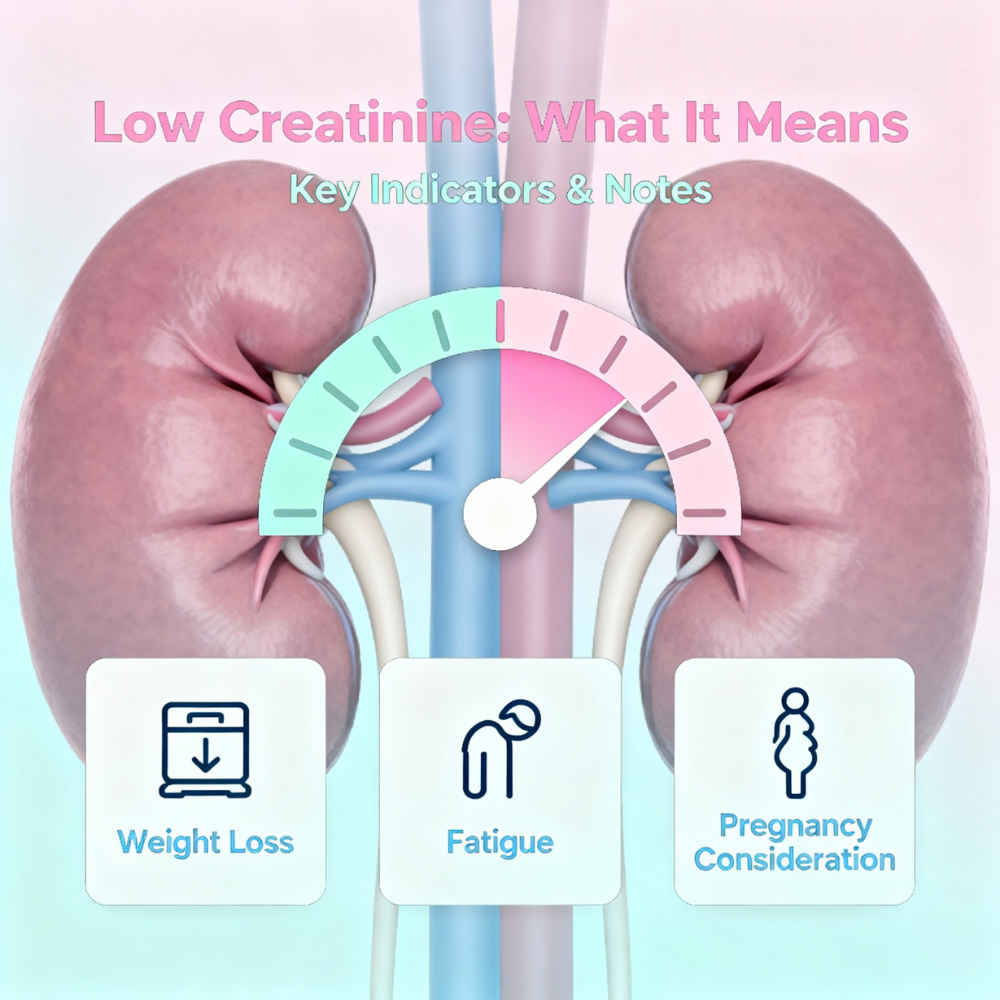
Low Creatinine Meaning alone does not produce symptoms. Instead, the signs and symptoms depend on the root cause. For example:
- Muscle loss (sarcopenia): Weakness, reduced physical endurance, and visible muscle shrinkage
- Liver problems: Fatigue, digestive issues, and changes in skin or eye color (jaundice)
- Neurological disorders (ALS, stroke): Weak movements, difficulty controlling muscles, or paralysis
- Pregnancy-related: Generally no symptoms, as low creatinine is expected and normal during pregnancy
Because symptoms are indirect, regular screening tests are essential to detect low creatinine early.
Causes of Low Creatinine
1. Inadequate Protein Intake
Creatine, the precursor of creatinine, comes from two sources: it is produced in the liver and obtained from dietary protein (mainly meat and fish). If you don’t consume enough protein, your creatine levels may drop, which reduces your creatinine levels as well. Vegetarians and vegans may be more at risk if they do not consume sufficient plant-based protein or supplements.
2. Low Muscle Mass
Low Creatinine Meaning is common in older adults due to declining muscle mass. Conditions such as immobility, prolonged bed rest, limb amputations, and diseases like amyotrophic lateral sclerosis (ALS) or muscular dystrophy may also cause significant reductions in creatinine levels.
3. Pregnancy
During pregnancy, the kidneys filter more blood. This increased clearance naturally lowers creatinine levels. It is usually not a cause for concern and resolves after childbirth.
4. Liver Disease
Since creatine is produced in the liver, advanced liver damage can decrease creatine production, leading to lower creatinine levels.
Diagnosis of Low Creatinine
Creatinine levels are measured through:
- Blood test: A standard test often included in a basic metabolic panel
- Urine test: Measures how much creatinine is removed from the body over 24 hours
Doctors usually interpret low creatinine results in the context of other test values, physical exam findings, and patient history.
Treatment for Low Creatinine
Low creatinine does not require direct treatment. Instead, the underlying health issue is addressed. Depending on the cause, doctors may recommend:
- Dietary improvements: Increasing protein intake through food or supplements
- Exercise: Strength training to build muscle mass
- Managing medical conditions: Treating liver disease, neuromuscular disorders, or preventing further loss of mobility
- Specialist referrals: If creatinine changes are linked to serious diseases, patients may be referred to a nephrologist, hepatologist, or neurologist
The Takeaway
Low creatinine is not a medical condition itself but a signal that something else needs attention, such as muscle health, liver function, or protein intake. While normal during pregnancy, persistent low levels outside of that context should be evaluated by a healthcare provider.
Simple lifestyle changes, such as improving diet and exercise habits, may help when the cause is minor. However, when linked to serious illnesses, professional treatment will focus on managing the underlying condition.
FAQs
What does low creatinine meaning?
Low creatinine usually indicates reduced muscle mass, insufficient protein intake, liver disease, or pregnancy-related clearance changes. It is not a disease itself but a health marker that depends on underlying conditions.
Is low creatinine dangerous?
By itself, low creatinine is not harmful. The concern lies in why creatinine is low. For example, if caused by severe muscle wasting or liver disease, then the root problem may be more serious.
Can dehydration cause low creatinine levels?
No, dehydration generally causes higher creatinine levels, not lower. Low creatinine is typically linked with low muscle mass, poor nutrition, or liver function problems.
What foods can raise creatinine levels?
Eating more protein-rich foods such as lean meat, poultry, fish, eggs, and dairy can help normalize creatinine levels if the cause is low protein intake. For vegetarians, beans, legumes, nuts, and soy-based foods are good options. Creatine supplements may also help if recommended by a doctor.
Can exercise increase creatinine levels?
Yes, building muscle through regular strength training may naturally increase creatinine, since creatinine forms as a by-product of muscle breakdown during energy use. However, levels should always be monitored through blood tests.
How is low creatinine diagnosed?
Low creatinine is typically detected with a blood test (part of a basic metabolic panel). In men, values below 0.7 mg/dL, and in women, below 0.6 mg/dL, may indicate low creatinine. A urine test may also be used in some situations.
Does pregnancy always cause low creatinine levels?
Yes, pregnancy often lowers creatinine levels due to higher kidney clearance rates. This is normal and usually not a cause for concern unless other abnormal lab results are present.
Should I take supplements if I have low creatinine?
Not always. Supplements like creatine may be useful if low creatinine is linked to low protein intake or vegetarian diets, but they are not needed in all cases. Always consult your doctor before starting supplements.
What lifestyle changes help improve low creatinine levels?
- Eating enough high-quality protein
- Engaging in strength-building exercise
- Managing chronic illnesses through medications
- Avoiding extreme low-calorie or low-protein diets
What is the difference between low creatinine and high creatinine?
- Low creatinine: Often related to low muscle mass, poor nutrition, or liver disease
- High creatinine: Usually associated with kidney impairment since the kidneys cannot filter waste efficiently