




Is Oatmeal Good for Diabetics? Proven, Powerful, and Life-Changing


is oatmeal good for diabetics breakfast bowl—it can also play a valuable role in supporting blood sugar control and overall health in people with type 2 diabetes. By providing fiber, nutrients, and slow-digesting carbohydrates, oats may help reduce glucose spikes, improve cholesterol levels, and support healthy weight management.
This guide explores the science, benefits, best preparation methods, and topping choices for making oatmeal part of a diabetes-friendly diet.
Why is Oatmeal good for Diabetics
is oatmeal good for diabetics nutrient-dense whole grain that provides long-lasting energy without the rapid blood sugar spikes caused by refined grains. Unlike sugary cereals or white flour-based breakfasts, oats digest slowly, keeping you fuller longer and stabilizing blood sugar.
For adults with type 2 diabetes, this is especially important because managing blood sugar levels reduces the risk of long-term complications like nerve damage, heart disease, and kidney problems.
Key nutrients in oatmeal include:
- Magnesium – helps the body use insulin more efficiently.
- Iron and phosphorus – support healthy blood and bone function.
- Zinc – aids immunity, wound healing, and metabolism.
- Soluble fiber (beta-glucan) – reduces LDL cholesterol and slows glucose absorption.
The Science Behind Oatmeal and Blood Sugar
When you eat oatmeal, the soluble fiber forms a gel-like substance in the stomach that slows digestion. This process:
- Prevents sharp rises in blood sugar.
- Helps the body absorb nutrients more evenly over time.
- Creates a sense of fullness, reducing the likelihood of overeating.
Studies show that beta-glucan fiber not only lowers blood sugar after meals but can also improve fasting glucose in people with type 2 diabetes. This means oatmeal supports both short-term and long-term blood sugar goals.
Blood Sugar and Weight Management Benefits
Weight management is often a cornerstone of type 2 diabetes care, and oatmeal can play a powerful role. Since it is naturally filling and relatively low in calories, it helps reduce overeating and snacking.
- A 1-cup serving of cooked oats has about 30 grams of carbs, 4 grams of fiber, and about 150 calories.
- The high fiber slows digestion, creating steady energy.
- Oats support a calorie deficit by replacing less healthy, higher-calorie breakfasts.
Daily fiber needs often go unmet, with over 90% of adults not consuming the recommended amount. For people with diabetes, striving for 10 grams of fiber per meal from sources like oats, vegetables, and legumes may reduce health risks.
Oatmeal and Heart Health
Heart disease risk is higher for people with type 2 diabetes due to long-term high blood sugar levels damaging blood vessels. Including oatmeal regularly may help by:
- Lowering total and LDL (bad) cholesterol.
- Improving HDL (good) cholesterol balance.
- Providing anti-inflammatory compounds that protect arteries.
Over time, these effects may reduce the likelihood of heart attack, stroke, or other cardiovascular complications.
Best Types of Oats for Diabetes
Not all oats offer the same benefits. How much they help depends on how processed the oats are.
- Steel-Cut Oats (Irish Oats): The least processed, take longer to cook, and offer the most fiber and lowest glycemic impact.
- Rolled Oats (Old-Fashioned Oats): Moderately processed, quicker to cook than steel-cut, but still a strong option.
- Instant Oats: Highly processed, cook in minutes, but have a much higher glycemic index and less fiber.
- Oat Porridge/Groats: Dense and hearty, with strong benefits for fullness and slow digestion.
Glycemic Impact of Oat Types
- Steel-cut oats: lowest glycemic index (best for blood sugar).
- Rolled oats: GI score ~60, GL ~9.
- Instant oats: GI score ~74, GL over 41.
Steel-cut is the gold standard, but rolled oats are still a good choice if convenience is a priority. Avoid pre-flavored instant oatmeal, which often contains added sugar.
Smart Oatmeal Toppings for Diabetes
While oatmeal on its own offers many benefits, toppings can make or break its effect on blood sugar.
Best Toppings
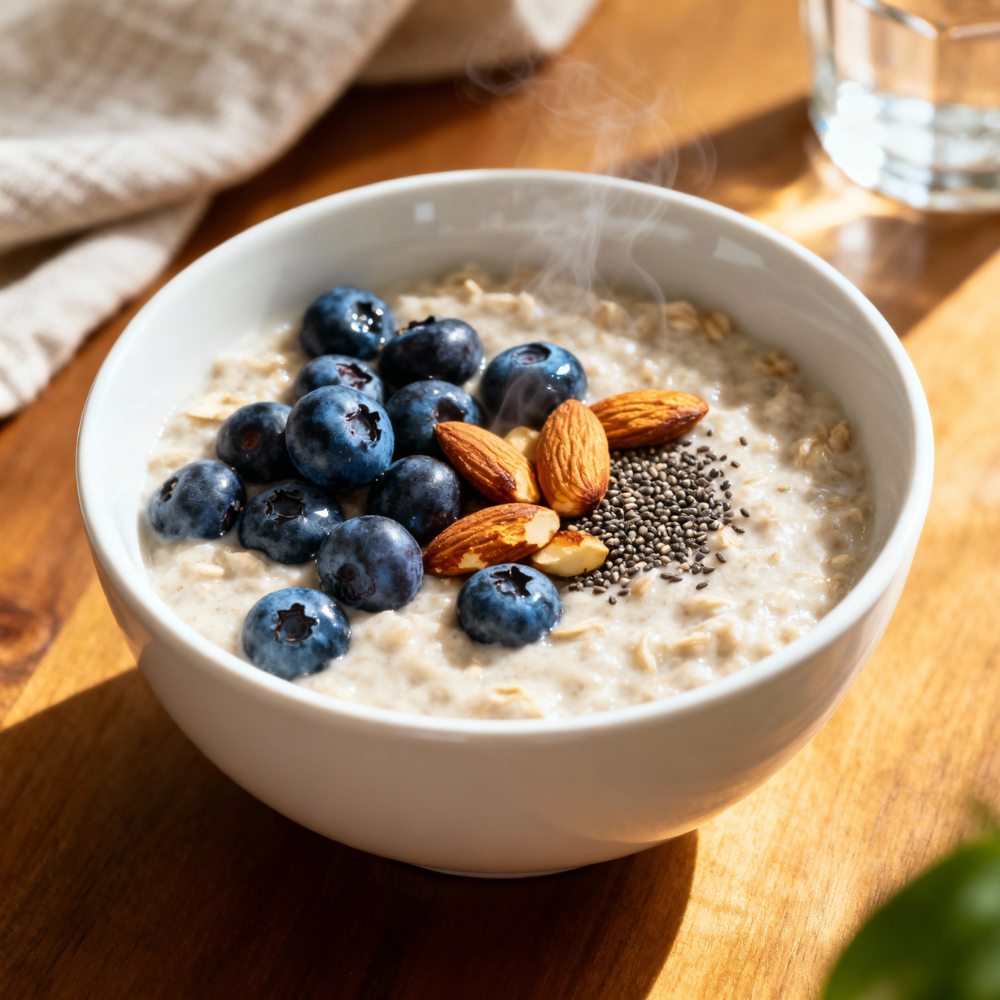
- Fresh berries (blueberries, raspberries, strawberries) – low GI, rich in fiber and antioxidants.
- Nuts and seeds (almonds, walnuts, flaxseed, chia) – add protein, healthy fats, and extra fiber.
- Cinnamon – may help improve insulin sensitivity naturally.
- Greek yogurt (unsweetened) – boosts protein and creaminess, aiding satiety.
Toppings to Limit
- Dried fruit with added sugar (raisins, cranberries) – high GI and dense in natural sugars.
- Flavored syrups or honey – spike blood sugar and add empty calories.
- Flavored instant oatmeal packets – usually contain hidden sugars.
A simple formula is: oats + fresh fruit + protein (nuts/seeds/yogurt) = diabetes-friendly breakfast.
Cooking Methods That Help
The way you cook oats matters almost as much as the type of oats you choose.
- Longer cooking = Lower blood sugar impact. Steel-cut oats take the most time but deliver the most stable glucose effect.
- Avoid pre-sweetened instant oats. Instead, flavor naturally with nuts, fruit, or cinnamon.
- Soak overnight. Preparing oats the night before (overnight oats) can make digestion even slower and steadier.
Meal Ideas: Oatmeal Beyond Breakfast
Oats don’t have to be limited to breakfast. Here are ways to incorporate them into meals throughout the day:
- Savory oatmeal bowl: Cook with vegetable broth, top with spinach, mushrooms, and a poached egg.
- Overnight oats: Mix with chia seeds, almond milk, and fresh fruit for a ready-to-go meal.
- Oat pancakes: Use blended oats instead of white flour for healthier pancakes.
- Oat smoothies: Add a few tablespoons of rolled oats to smoothies for thickness and extra fiber.
- Oat-based snacks: Use oats as a base for energy balls with nut butter and seeds (avoid excess sweeteners).
Potential Drawbacks to Be Aware
While oatmeal is generally beneficial, consider a few cautions:
- Portion control is key. Too much oatmeal means too many carbs. Stick to about ½–1 cup cooked.
- Some people may experience bloating if they rapidly increase fiber intake. Increase slowly and drink more water.
- Always skip flavored instant options loaded with sugar. They cancel out most of the health advantages.
Practical Tips for Including Oatmeal in a Diabetes Diet
- Pair oatmeal with a protein source (eggs, yogurt, nuts) to balance blood sugar.
- Choose steel-cut or rolled oats over instant.
- Avoid sugary toppings; use spices like cinnamon or nutmeg.
- Prep oats overnight to save time in the morning.
- Rotate oatmeal with other whole grains (quinoa, barley, buckwheat) for variety.
The Bottom Line
For people with type 2 diabetes, oatmeal can be a versatile and valuable food choice. Its fiber slows digestion, lowers glucose spikes, improves cholesterol, and supports weight management. The type of oats and the toppings you use determine how beneficial your bowl will be.
If you want the biggest benefits, choose steel-cut or rolled oats, prepare them with simple ingredients, and top with fresh fruit, nuts, or seeds. When eaten mindfully, oatmeal can be a staple in a diabetes-friendly meal plan that supports both daily energy needs and long-term health.
FAQs
1. Is oatmeal good for diabetics?
Yes, oatmeal can be a healthy choice for people with diabetes. It contains soluble fiber that slows digestion, helps prevent sharp blood sugar spikes, and supports heart health.
2. Which type of oatmeal is best for diabetics?
Steel-cut oats are the best choice because they are the least processed and have a lower glycemic index. Rolled oats are also good, but instant oats should be limited since they raise blood sugar more quickly.
3. How much oatmeal can a diabetic eat per day?
Most people with diabetes do well with about ½ to 1 cup of cooked oatmeal per serving. Portion control is important since oatmeal is still a carbohydrate source.
4. Can oatmeal lower blood sugar?
Yes, the beta-glucan fiber in oats slows the absorption of glucose, which can improve blood sugar control both after meals and while fasting.
5. What can diabetics add to oatmeal?
Healthy toppings include fresh berries, nuts, seeds, cinnamon, or unsweetened Greek yogurt. Avoid sugary syrups, flavored instant oats, or dried fruits with added sugar.
6. Is instant oatmeal bad for diabetics?
Flavored instant oatmeal is often high in sugar and has a higher glycemic index, which can cause blood sugar spikes. If using instant oats, choose plain versions with no added sweeteners.
7. Can oatmeal help with weight loss in diabetics?
Yes, oatmeal is filling and relatively low in calories. Its fiber content helps reduce hunger, which can support weight loss and better blood sugar control.
8. Is it better to eat oatmeal in the morning or at night for diabetes?
Morning is ideal since oatmeal provides steady energy throughout the day without large blood sugar fluctuations. However, it can also be eaten at night if portions and toppings are managed.
9. Can oatmeal help lower cholesterol for diabetics?
Yes, oatmeal is proven to lower LDL (“bad”) cholesterol levels, which is particularly important for people with diabetes who are at higher risk for heart disease.
10. What should be avoided when preparing oatmeal for diabetics?
Avoid adding refined sugar, honey, sweetened nut butters, dried fruit with added sugar, and flavored instant packets. These can cancel out the health benefits of oats.